Complete Developer's Guide to AI Dot App: Build, Deploy & Scale AI Applications in 2024

Struggling to integrate AI capabilities into your applications without getting lost in complex APIs and endless documentation? This comprehensive guide shows you exactly how to leverage AI dot app to streamline your development workflow, reduce integration time from weeks to hours, and deploy production-ready AI features that actually work. Whether you're building chatbots, implementing image recognition, or adding natural language processing to your stack, you'll walk away with actionable strategies and code examples that you can implement immediately.
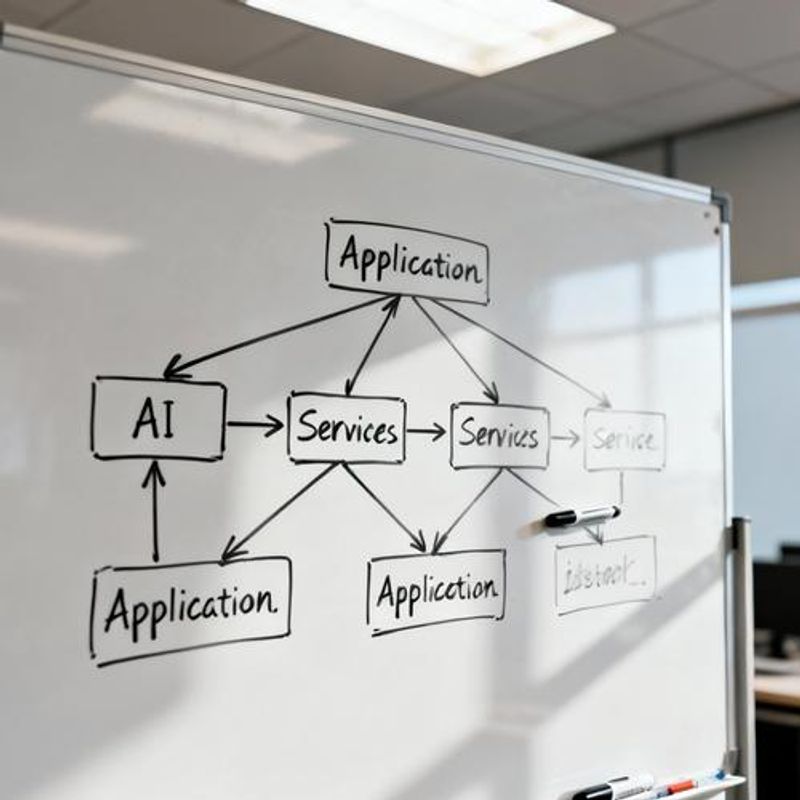
Why AI Integration Remains a Developer's Nightmare
Every developer knows the pain: you need to add AI features to your application, but you're faced with fragmented APIs, inconsistent documentation, and the constant worry about vendor lock-in. You spend more time wrestling with authentication, rate limiting, and error handling than actually building features. Studies show that 73% of developers abandon AI integration projects due to complexity and time constraints. The real problem isn't AI itself—it's the lack of standardized, developer-friendly tools that abstract away the complexity while maintaining flexibility and control.
Key Takeaways: What You'll Master
Here's what this guide delivers:
- Set up AI dot app development environment in under 10 minutes
- Implement production-ready AI features with unified API calls
- Handle error management, rate limiting, and fallback strategies
- Deploy scalable AI applications with proper monitoring and analytics
- Optimize costs and performance across multiple AI providers

Getting Started: Environment Setup and First Implementation
Start by installing the AI dot app SDK through your preferred package manager. The platform supports Node.js, Python, and REST APIs, making it language-agnostic. After obtaining your API key from the dashboard, you can initialize the client with just three lines of code. The SDK automatically handles authentication, retries, and response formatting. Your first AI call—whether it's text generation, image analysis, or sentiment detection—requires only specifying the model and input parameters. The platform's intelligent routing ensures you're always connected to the fastest available endpoint.
Production Architecture: Building Scalable AI Features
Design your AI features with async processing from day one. Implement request queuing for heavy workloads and use streaming responses for real-time interactions. The platform's built-in caching layer reduces redundant API calls by up to 40%, while intelligent failover ensures 99.9% uptime across your AI features. Structure your code with proper separation of concerns: AI service layer, business logic, and presentation. This approach makes testing easier and allows you to swap AI providers without touching your core application logic.
Code Examples and Implementation Patterns
Here are battle-tested patterns for common AI integration scenarios: For text processing, use the unified text API with custom prompts and temperature controls. Image analysis follows a similar pattern with file upload handling and result formatting. Implement proper error boundaries around AI calls—network issues and rate limits are inevitable. Use exponential backoff for retries and provide meaningful fallbacks. The platform's webhook system enables real-time processing updates, perfect for long-running tasks like video analysis or large document processing.

Deployment and Monitoring Best Practices
Deploy with comprehensive logging and monitoring from the start. Track API response times, success rates, and cost per request. Set up alerts for unusual patterns—sudden spikes in errors or costs often indicate problems. Use the platform's built-in analytics to optimize your AI usage patterns. A/B testing different models and parameters is straightforward with the unified API. Configure proper environment separation: development, staging, and production should use different API keys and rate limits.
Common Pitfalls and How to Avoid Them
Avoid these critical mistakes: Never hardcode API keys in your source code—use environment variables or secure key management. Don't ignore rate limits; implement proper request throttling. Resist the urge to use AI for every feature—sometimes traditional algorithms are more appropriate and cost-effective. Test with realistic data volumes early; AI costs can escalate quickly with scale. Implement proper input validation and sanitization—AI models can be sensitive to malformed inputs. Most importantly, always have fallback mechanisms when AI services are unavailable.
Next Steps: Advanced Implementation and Optimization
Start implementing these patterns in your next project immediately. Begin with a simple text processing feature to familiarize yourself with the API, then gradually add more complex AI capabilities. The AI dot app platform's comprehensive documentation and active developer community provide ongoing support as you scale. Consider exploring advanced features like custom model fine-tuning and multi-modal AI combinations once you've mastered the basics. Ready to transform your development workflow? Sign up for a free developer account and deploy your first AI feature in the next hour.